Showing posts with label memoirs. Show all posts

Monday, August 1, 2011

A beautiful memoir of perseverance, courage and love: Thunder Dog: The True Story of a Blind Man, His Guide Dog, and the Triumph of Trust at Ground Zero

Thunder Dog: The True Story of a Blind Man, His Guide Dog, and the Triumph of Trust at Ground Zero [Hardcover]


The bond with a dog is as lasting as the ties of this earth can ever be.
Konrad Lorenz

A blind man and his guide dog show the power of trust and courage in the midst of devastating terror.

It was 12:30 a.m. on 9/11 and Roselle whimpered at Michael's bedside. A thunderstorm was headed east, and she could sense the distant rumbles while her owners slept. As a trained guide dog, when she was "on the clock" nothing could faze her. But that morning, without her harness, she was free to be scared, and she nudged Michael's hand with her wet nose as it draped over the bedside toward the floor. She needed him to wake up.

With a busy day of meetings and an important presentation ahead, Michael slumped out of bed, headed to his home office, and started chipping away at his daunting workload. Roselle, shivering, took her normal spot at his feet and rode out the storm while he typed. By all indications it was going to be a normal day. A busy day, but normal nonetheless. Until they went into the office.

In Thunder Dog, follow Michael and his guide dog, Roselle, as their lives are changed forever by two explosions and 1,463 stairs. When the first plane struck Tower One, an enormous boom, frightening sounds, and muffled voices swept through Michael's office while shards of glass and burning scraps of paper fell outside the windows.

But in this harrowing story of trust and courage, discover how blindness and a bond between dog and man saved lives and brought hope during one of America's darkest days.

Read more Details


Review

Hands down this is one of the best books I have read in a long time. I started reading and couldn't put it down. I even found myself reading while I was trying to cook dinner! I felt every emotion; I laughed, I cried, you get the picture. I usually try to stay away from books about 9/11, quite frankly it the memory is still a little to raw for me. But this book is different. When reading it I felt like I was in the stairwell, but at the same time it was strangely uplifting. Plus I gotta say, I'm a complete sucker for a good dog book! Especially one with a happy ending for the dog!

To sum it up, Michael and his dog Roselle were working in the Twin Towers on 9/11. This is the story of their descent down the stairwell and through the streets back home. Do yourself a favor and read this book! You will be so glad you did! I would give it 10 stars if I could!

Disclosure of Material Connection: I received this book free from the publisher through the BookSneeze®.com book review bloggers program. I was not required to write a positive review. The opinions I have expressed are my own. I am disclosing this in accordance with the Federal Trade Commission's 16 CFR, Part 255 : "Guides Concerning the Use of Endorsements and Testimonials in Advertising." - fizzle7033

Read more Customer Reviews


About the Author

Michael Hingson, national ambassador for the Braille Literacy Campaign, is a miraculous survivor of 9/11. He now owns The Michael Hingson Group, Inc., a consulting firm concerning inclusiveness and diversity and a platform for engaging speaking opportunities. A graduate of the University of California (Irvine) and a cum laude graduate with a master’s degree in physics, Hingson has never let blindness stop him from achieving his goals. His life is a testimony to the power of trust, perseverance, and the amazing bond between humans and animals. Michael and his wife, Karen, live in the San Francisco Bay Area with three yellow lab guide dogs, Roselle (ret.), Africa, and Fantasia, and one cat, Sherlock.

Go to TheBookSeller

Also available in Kindle Edition


Relate Books


       Until Tuesday: A Wounded Warrior and the Golden Retriever Who Saved Him by Luis Carlos Montalvan Hardcover

Close Your Eyes: A Novel by Amanda Eyre Ward


Add to Technorati Favorites
Bookmark and Share

Monday, November 29, 2010

Interesting Biography On Several Levels - Worth The Read:Spoken from the Heart by Laura Bush

Spoken from the Heart by Laura Bush

List Price:$30.00
Price:$17.54 & eligible for FREE Super Saver Shipping on orders over $25. Details
You Save:$12.46 (42%)


In this brave, beautiful, and deeply personal memoir, Laura Bush, one of our most beloved and private first ladies, tells her own extraordinary story.

Born in the boom-and-bust oil town of Midland, Texas, Laura Welch grew up as an only child in a family that lost three babies to miscarriage or infant death. She vividly evokes Midland's brash, rugged culture, her close relationship with her father, and the bonds of early friendships that sustain her to this day. For the first time, in heart-wrenching detail, she writes about the devastating high school car accident that left her friend Mike Douglas dead and about her decades of unspoken grief.

When Laura Welch first left West Texas in 1964, she never imagined that her journey would lead her to the world stage and the White House. After graduating from Southern Methodist University in 1968, in the thick of student rebellions across the country and at the dawn of the women's movement, she became an elementary school teacher, working in inner-city schools, then trained to be a librarian. At age thirty, she met George W. Bush, whom she had last passed in the hallway in seventh grade. Three months later, "the old maid of Midland married Midland's most eligible bachelor." With rare intimacy and candor, Laura Bush writes about her early married life as she was thrust into one of America's most prominent political families, as well as her deep longing for children and her husband's decision to give up drinking. By 1993, she found herself in the full glare of the political spotlight. But just as her husband won the Texas governorship in a stunning upset victory, her father, Harold Welch, was dying in Midland.

In 2001, after one of the closest elections in American history, Laura Bush moved into the White House. Here she captures presidential life in the harrowing days and weeks after 9/11, when fighter-jet cover echoed through the walls and security scares sent the family to an underground shelter. She writes openly about the White House during wartime, the withering and relentless media spotlight, and the transformation of her role as she began to understand the power of the first lady. One of the first U.S. officials to visit war-torn Afghanistan, she also reached out to disease-stricken African nations and tirelessly advocated for women in the Middle East and dissidents in Burma. She championed programs to get kids out of gangs and to stop urban violence. And she was a major force in rebuilding Gulf Coast schools and libraries post-Katrina. Movingly, she writes of her visits with U.S. troops and their loved ones, and of her empathy for and immense gratitude to military families.


With deft humor and a sharp eye, Laura Bush lifts the curtain on what really happens inside the White House, from presidential finances to the 175-year-old tradition of separate bedrooms for presidents and their wives to the antics of some White House guests and even a few members of Congress. She writes with honesty and eloquence about her family, her public triumphs, and her personal tribulations. Laura Bush's compassion, her sense of humor, her grace, and her uncommon willingness to bare her heart make this story revelatory, beautifully rendered, and unlike any other first lady's memoir ever written.


Review

Very well written. I enjoyed it very much. Especially if you like Laura Bush.....I loved the fact that it was written by someone who has always loved books. --Verna Ragland

Spoken from the Heart by Laura Bush more details...>>>


Add to Technorati Favorites

Bookmark and Share

Good Overview Of The Bush Years:Decision Points by George W. Bush[Hardcover]

Decision Points by George W. Bush

List Price:$35.00
Price:$18.89 & eligible for FREE Super Saver Shipping on orders over $25. Details
You Save:$16.11 (46%)


In this candid and gripping account, President George W. Bush describes the critical decisions that shaped his presidency and personal life.

George W. Bush served as president of the United States during eight of the most consequential years in American history. The decisions that reached his desk impacted people around the world and defined the times in which we live.

Decision Points
brings readers inside the Texas governor's mansion on the night of the 2000 election, aboard Air Force One during the harrowing hours after the attacks of September 11, 2001, into the Situation Room moments before the start of the war in Iraq, and behind the scenes at the White House for many other historic presidential decisions.

For the first time, we learn President Bush's perspective and insights on:
  • His decision to quit drinking and the journey that led him to his Christian faith
  • The selection of the vice president, secretary of defense, secretary of state, Supreme Court justices, and other key officials
  • His relationships with his wife, daughters, and parents, including heartfelt letters between the president and his father on the eve of the Iraq War
  • His administration's counterterrorism programs, including the CIA's enhanced interrogations and the Terrorist Surveillance Program
  • Why the worst moment of the presidency was hearing accusations that race played a role in the federal government’s response to Hurricane Katrina, and a critical assessment of what he would have done differently during the crisis
  • His deep concern that Iraq could turn into a defeat costlier than Vietnam, and how he decided to defy public opinion by ordering the troop surge
  • His legislative achievements, including tax cuts and reforming education and Medicare, as well as his setbacks, including Social Security and immigration reform
  • The relationships he forged with other world leaders, including an honest assessment of those he did and didn’t trust
  • Why the failure to bring Osama bin Laden to justice ranks as his biggest disappointment and why his success in denying the terrorists their fondest wish—attacking America again—is among his proudest achievements
A groundbreaking new brand of presidential memoir, Decision Points will captivate supporters, surprise critics, and change perspectives on eight remarkable years in American history—and on the man at the center of events.

Since leaving office, President George W. Bush has led the George W. Bush Presidential Center at Southern Methodist University in Dallas, Texas. The center includes an active policy institute working to advance initiatives in the fields of education reform, global health, economic growth, and human freedom, with a special emphasis on promoting social entrepreneurship and creating opportunities for women around the world. It will also house an official government archive and a state-of-the-art museum that will open in 2013.

Review

Here's what I took out of reading this book.

First, I got a great overview of world events that occurred during Bush's eight years in office. Regardless of whether you agreed with Bush, your memory will at least be refreshed on the important events of the Bush years, including 9/11, the stem cell controversy, Iraq, Afghanistan, and the financial meltdown. With hindsight being 20/40, it's easy to forget how we felt during some of those events, and this book does a good job of bringing us back to those uncertain times.

Second, it made me sympathize with Bush for some of the decisions he made, including those I disagreed with. I was struck at how influenced he was by the people around him. For example, his advisors basically put him in a
state of constant fear of a potential terrorist strike on him personally, and I was left wondering whether this was the cause of some of his war mentality. Another example is the doomsday scenario he was given during the financial crisis. These "worst case scenarios" always seemed to be the guiding light of his decisions. Also, while I disagreed with his stem cell policy, that chapter at least helped me understand his thinking.

Third, I was reminded of some of the reasons why I was ready for Bush to leave office when he did. The chapter that most reminded me of this was the one called "Freedom Agenda"; this chapter contains his overly-simplistic, black-and-white view of the world that I did not like during his presidency.

So whether you agree with Bush or not, I think this was a worth-while read. The most boring chapter was the one about the African malaria/AIDS initiative. Other than that, it kept my attention. --William E. Liberatore "edcctf"

Decision Points by George W. Bush more details...>>>


Add to Technorati Favorites

Bookmark and Share

Monday, May 5, 2008

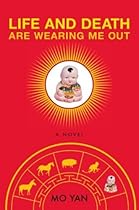
Life and Death are Wearing Me Out: A Novel By Mo Yan


Born Again

In the summer of 1976, as Chairman Mao lay on his deathbed in Beijing, the pigs at the Ximen Village Production Brigade Apricot Garden Pig Farm in Gaomi County, Shandong Province, also began to die. The first batch of five were found with “their skin dotted with purple splotches the size of bronze coins, their eyes open, as if they’d died with unresolved grievances.” The commune vet declared they had succumbed to “what we call the Red Death” and ordered them to be cremated and buried immediately. But it had been raining for weeks and the ground was too waterlogged. Dousing the carcasses with kerosene and trying to set them alight simply filled the farm with vile-smelling smoke. Soon 800 more pigs were infected. A fresh team of vets arrived by motorboat with more sophisticated medicines, but their ministrations were of little help. Dead pigs were piled up throughout the farm, their bloated forms expanding and exploding in the heat.
Unable to bury the corpses, the farmers “had no choice but to wait until the veterinarians left and, in the fading light of dusk, load the carcasses onto a flatbed wagon and haul them down to the river, where they were tossed into the water to float downstream — out of sight and out of mind.” The farm was in ruins, proof that its “glorious days” were “now a thing of the past.” The foundations of the hog houses collapsed, and raging flood waters toppled the utility poles, cutting the commune off from the wider world. Thus it was only through the village’s single transistor radio that these farmers learned Mao had died. “How could Chairman Mao be dead? Doesn’t everyone say that he could live at least 158 years?”
Mo Yan’s powerful new novel, “Life and Death Are Wearing Me Out,” contains many such vivid set pieces. His canvas covers almost the entire span of his country’s revolutionary experience — from 1950 until 2000, in the so-called “reform era” of post-Deng Xiaoping China. At one level, therefore, “Life and Death” is a kind of documentary, carrying the reader across time from the land reform at the end of the Chinese Civil War, through the establishment of mutual-aid teams and lower-level cooperatives in the early and mid-1950s, into the extreme years of the Great Leap Forward and the famine of the late ’50s and early ’60s, and on to the steady erosion of the collective economy in the new era of largely unregulated “capitalism with socialist characteristics.” At the novel’s close, some of the characters are driving BMWs, while others are dyeing their hair blond and wearing gold rings in their noses.
Yet although one can say that the political dramas narrated by Mo Yan are historically faithful to the currently known record, “Life and Death” remains a wildly visionary and creative novel, constantly mocking and rearranging itself and jolting the reader with its own internal commentary. This is politics as pathology. From the start, the reader must be willing to share with Mo Yan the novel’s central conceit: that the five main narrators are not humans but animals, albeit ones who speak with sharply modulated human voices. Each of the successive narrators — a donkey, an ox, a pig, a dog, a monkey — are the sequential reincarnations of a man named
Ximen Nao, as determined by Yama, lord of the underworld.
Ximen Nao, a 30-year-old wealthy landlord in Gaomi County, is shot on a cold December day at point-blank range by one of his fellow villagers in the first period of land reform after the Communist takeover. Confident that his life on earth has been honest, constructive and valuable to the community, that he has been a good son and devoted father, a loving spouse to a principal wife and two concubines, Ximen Nao protests against the injustice of his fate. Yama responds by observing that it is well known that many people “who deserve to die somehow live on while those who deserve to live die off.” Therefore, Yama agrees to grant a transmigration for Ximen Nao, and it is from that moment that he returns to earth, first in animal and finally again in human form.
Such a fictional procedure is, of course, fraught with difficulties of tone and narration. The five different animal narrators must describe their own experiences in their own animal voices, tinged with some of the emotions and knowledge of their previous lives on earth. Their main anchor to what we might call reality lies in the fact that each has some connection to Ximen Nao’s surviving hired hand, Lan Lian, a tough, dour, hard-working farmer who insists on clinging to his own small plot of family land and adamantly refuses to join any of the successive socialist organizations. Willful, proud and enduring, Lan Lian is the owner or companion of each of the animals in turn. They share their scanty rations and labor together. Though they cannot talk to one another, Lan Lian somehow senses in each of these five beings some joint and nostalgic memory of his own murdered landlord.
Such a brief summary may make the book sound too cute when it is, in fact, harsh and gritty, raunchy and funny. The revolutionaries’ village politics are deadly; sex in the village (whether human or animal) is flamboyant and consuming. Death is unexpected and usually violent. Coincidences of plotting abound. The zaniest events are depicted with deadpan care, and their pathos is caught at countless moments by the fluent and elegant renderings of the veteran translator Howard Goldblatt. One might have thought it impossible, but each animal does comment with its own distinctive voice — the mordant view of the multiple deaths on the pig farm, for instance, comes largely from the reincarnated pig persona. In addition, either Lan Lian or some other human will often pick up the burden of narration and commentary.
The book’s author is also frequently in evidence within the narrative structures. His limitations as a writer and a person are consistently mocked, and we are regularly reminded by Mo Yan the author that the character of Mo Yan represented in the novel is not to be trusted. “Mo Yan was never much of a farmer,” we are told. “His body may have been on the farm, but his mind was in the city. Lowborn, he dreamed of becoming rich and famous; ugly as sin, he sought the company of pretty girls; generally ill-informed, he passed himself off as a knowledgeable academic. And with all that, he managed to establish himself as a writer, someone who dined on tasty pot stickers in Beijing every day.” By the end of the novel, Mo Yan has developed a separate existence as one of the main characters. It is at his home in the city of Xi’an that Lan Lian’s son is able to take shelter with his lover for five difficult years. Mo Yan even makes sure that the couple have a supply of Japanese condoms.
“Life and Death Are Wearing Me Out” is not unremittingly hostile to the Communist system, and at times Mo Yan seems eager to rebuild the very bridges he has been burning. “I have nothing against the Communist Party,” Lan Lian says at one despairing stage, “and I definitely have nothing against Chairman Mao. I’m not opposed to the People’s Commune or to collectivization. I just want to be left alone to work for myself.” But such reassurances of party loyalty seem frail in the context of such a vast, cruel and complex story.
The kind of critique that we find in this book has many echoes within China today. In his new novel, “Wolf Totem,” Jiang Rong includes a ferocious account of the battle between a starving wolf pack and a herd of wild horses that seems tightly geared to showing the value of older ways of living in the steppe, in contrast with the ultimately disastrous values insisted on by the Party. Mo Yan has his own version of such a battle in his account of the donkeys’ struggle against the wolves near the collective farm. Yan Lianke’s “Serve the People!” gives a common soldier and his mistress, the wife of the division commander, a summer of passionate lovemaking, culminating in a wild and randy spree in which they smash all the once-treasured artifacts and memorabilia of Mao Zedong and his outmoded, pointless policies. Such antipolitical passion also surfaces in many of the sexual entanglements Mo Yan describes in “Life and Death Are Wearing Me Out.” It seems that novels in China are coming into their own, that new freedoms of expression are being claimed by their authors. Mao has become a handy villain. One wonders how much longer his successors will be immune from similar treatment.
From: The New York Times: By JONATHAN SPENCE: May 4, 2008
Jonathan Spence teaches modern Chinese history at Yale. His latest book is “Return to Dragon Mountain: Memories of a Late Ming man.”

A WOLF AT THE TABLE: A Memoir of My Father By Augusten Burroughs


Returning to the Past and Finding the Bogeyman Is Still There

When Augusten Burroughs wrote “Running With Scissors,” he regaled readers with hilarious tales of the domestic craziness he endured while growing up. Now in another family memoir Mr. Burroughs makes a crazy move of his own. “A Wolf at the Table” is a portrait of the author’s apparently maniacal and Augusten-hating father. Determinedly unfunny, awkwardly histrionic and sometimes anything but credible, it repudiates everything that put Mr. Burroughs on the map.

It’s a bad sign when a book’s cover graphic packs more of a wallop than the text does. But “A Wolf at the Table” startles from afar by depicting a demonic-looking red fork, its tines bent like evil claws, seeming to point menacingly at some hapless victim. Enter the baby Augusten: the author channels his frightened 1 ½-year-old self. He does this with a burst of psychodrama that seems to have been editor-proof.

“Through this pinprick hole I could see the world,” he writes about sitting in his high chair, peeking through the perforations in a saltine cracker. Well, at least he’s not writing in fragments. But by the next page he is. “The thick slippery feel of my bottle’s rubber nipple inside my mouth,” he recalls verblessly. “The shocking, sudden emptiness that fills me when it’s pulled away.”

Well, at least he’s not invoking his toddler years in the present tense. And at least he’s not displaying Joycean affectations. But a line or two later, he is: “High above me is my crib, my homebox, my goodcage, but it’s up, up, up.” And: “I am alone in the awake-pit with the terrible bright above my head.” In case the cause for this free-floating distress is not apparent, Mr. Burroughs soon fingers his culprit. “On the other side of the door,” he writes, “He is laughing.”

He may find twisted humor in little Augusten’s situation, but it’s hardly clear why. “A Wolf at the Table” is as vague as it is hyperbolic about whatever was wrong with the author’s wicked father. This book indicates that the father drank heavily and quarreled with Augusten’s mother (to the point that they separated, and the father was a mere psoriasis-plagued memory by the time of Running with Scissors"). He was away from home a lot and was none too glad to see Augusten when he got back, not even when Augusten greeted him in a homemade dog costume. Don’t even ask what the old man did to Ernie, Augusten’s beloved pet guinea pig. But beyond that, the nature of this book’s indictment is unclear.

A photograph of Mr. Burroughs’s father, accompanying a recent article in The New York Times, depicted a fierce-looking, hollow-eyed man. Unfortunately for “A Wolf at the Table” that image was much more disturbing than anything Mr. Burroughs has put on the page.

Sometimes the book reduces the child to cartoon-character indignation. (“My hatred for him nearly caused my skin to steam, and I was constantly plotting revenge for one thing or another,” he fumes about his older brother.) Some of it exaggerates the simplest details to make them sinister. (The belts in the father’s drawer are said to be “coiled like snakes.”) And some of it pumps heavily metaphoric importance into minor-sounding incidents, clumsily ratcheting up the drama of the boy’s early life. Why was he too filled with dread to eat red velvet cake at a birthday party? Can the answer have been interesting enough to warrant inclusion in this book?

Since it can’t, “A Wolf at the Table” plants the dangerous idea that Mr. Burroughs’s story is a life milked dry. “Dry” was another of his memoirs, detailing a history of substance abuse; “Sellevision” was about his experiences in the advertising business; “Magical Thinking” wasn’t about much of anything. “Possible Side Effects” described the writer’s experience of being on a book tour, something that is also mentioned in the epilogue to the new book.

Prose about book tours attests that Mr. Burroughs has exhausted his vein of autobiographical nonfiction, just as surely as the fate of Ernie (“rigid in his sludge, his feces-caked mouth open in a scream”) proved Mr. Burroughs’s father to be a lousy rodent custodian.

Once it escapes the high chair and begins casting about for material, the author’s recovered memory yields a few stories about his parents’ turbulent and doomed marriage; little Augusten’s crush on a workman (“I had to run away, because there existed the very real danger that I would run to him, leap right up into his arms, and smother him with kisses, like some icky girl”), a few phantasmagorically violent daydreams about the harm Augusten’s father might inflict; and scenes of wild, over-the-top action, written with an assonance (“the jabbing slash of his flashlight”) that bodes badly for a Burroughs move toward poetry. No less strained are this book’s efforts to animate the universe in ways that foreshadow the boy’s burgeoning sexuality: “There were cunning little birds in brazen colors that flashed about like wild thoughts and perverse impulses.”

By the time “A Wolf at the Table” reaches its foregone conclusion — that the father will die and leave his son in some mournful semblance of peace — there is a new kind of suspense in the air. It involves Mr. Burroughs’s literary future. He remains a writer with a large and loyal following, a fluent and funny storyteller whenever he actually has stories to tell. Maybe those stories needn’t be so personal. Maybe his range can expand beyond tales of dysfunction. And maybe some thoughts belong on the page more than others do. No matter how plagued he is by the abuses of the past, he needn’t have confessed here to having had an erotic dream about visiting a mass murderer on death row.


From: Books of The Times: By JANET MASLIN: May 1, 2008

Related Posts with Thumbnails